
This blog covers quite a few days. The frogs have gone quiet, the tadpoles are thriving, especially in Tiny Pond, and now it’s the turn of the newts to dominate activity, so there are several videos and some bizarre pictures to show you, courtesy of the handy endoscope which I have used before (see blog 47).
Friday 3rd April
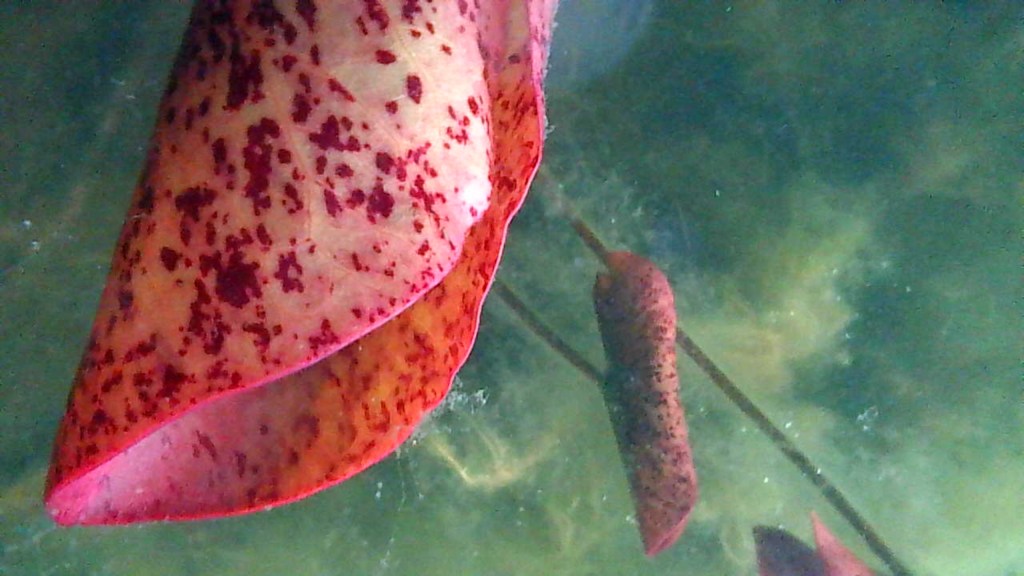
Today, I checked on the tadpoles and thought it was interesting how leaves and seedheads can provide a structure for a video clip. The colourful half-eaten leaf provides a shelter and the seeds are completely ignored as the tadpoles go about their business.
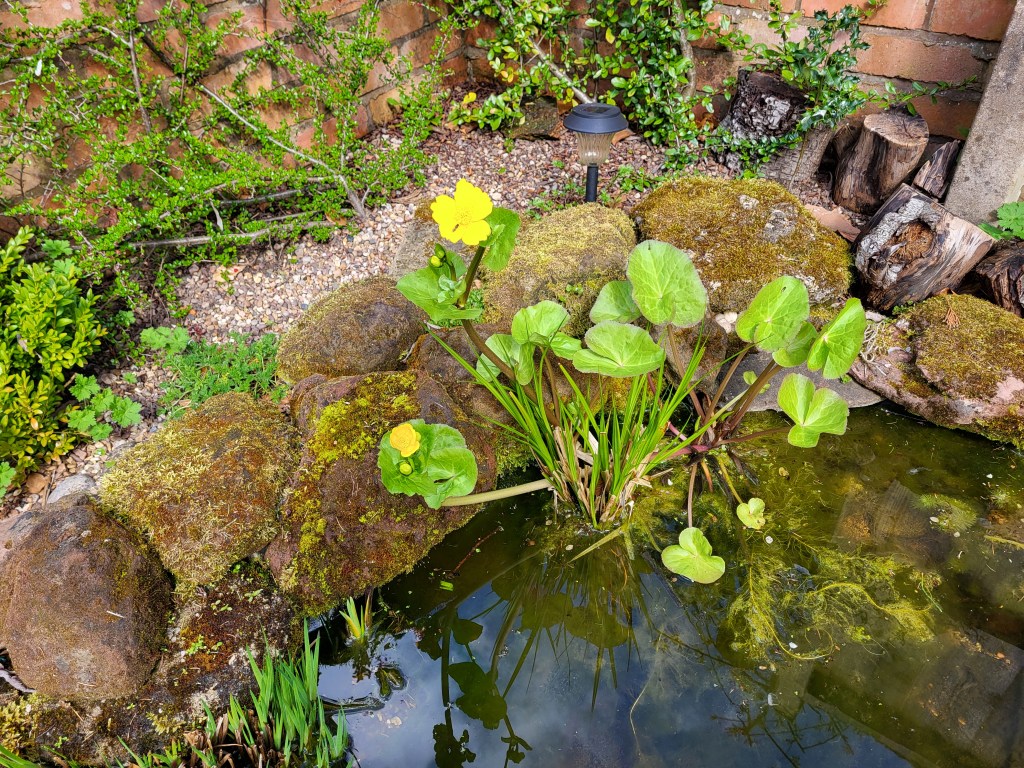
In Lily Pond, the tadpoles were less obvious, hiding under rocks and the roots of established spreading plants. However, this beautiful newt was on the prowl.
Monday 6th April
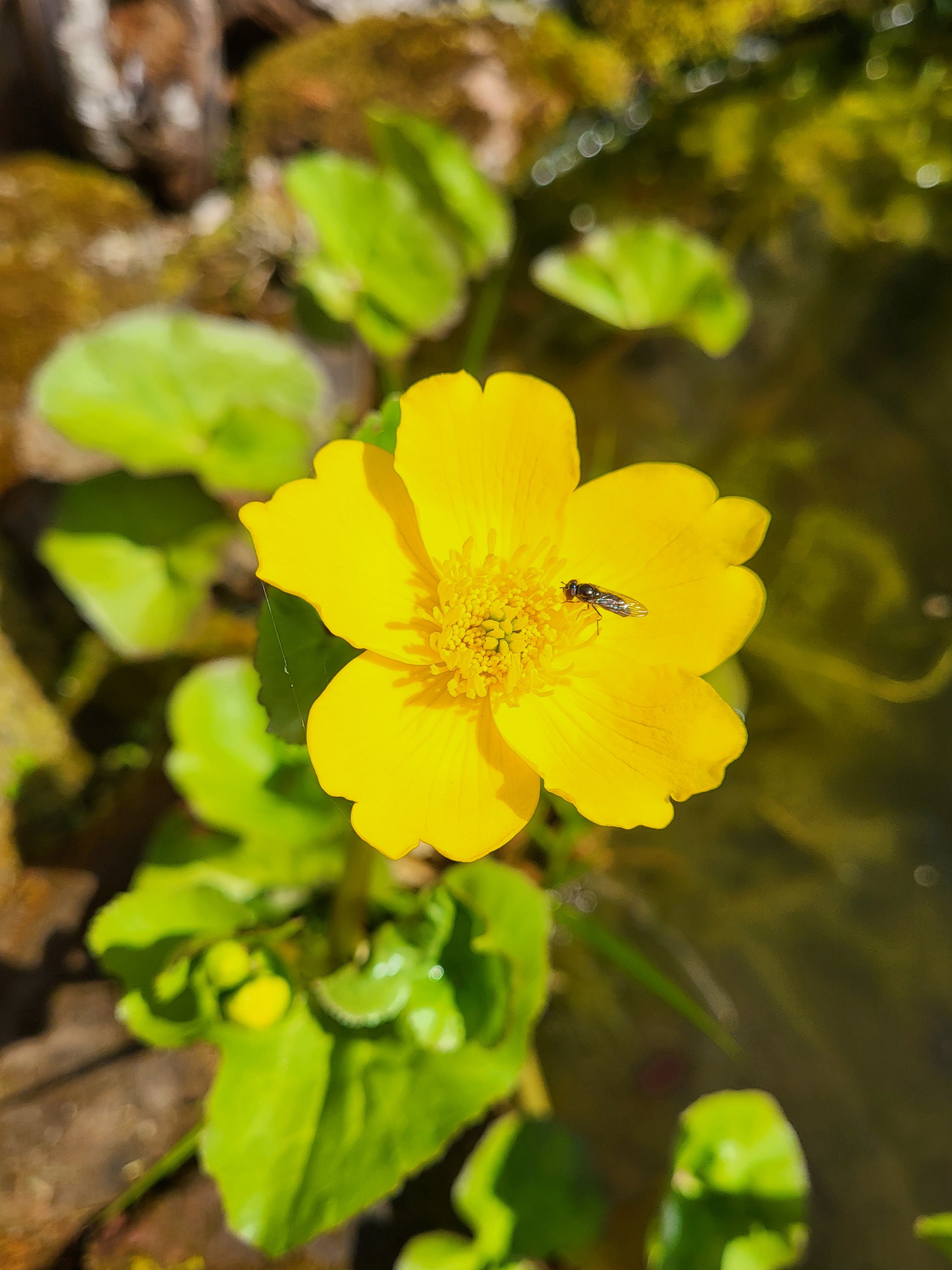
Today I caught some newt action. This is the first time I’ve managed to capture newts interacting. The insects were not the focus of the day but they were also mating… and photobombing.
Monday 6th April 2026
Tuesday 7th April
On Tuesday, I captured some footage of the distinctive tail flick of a mating newt. The male newt flick his tail as a way to signal interest and to waft pheromones in the female newt’s direction.
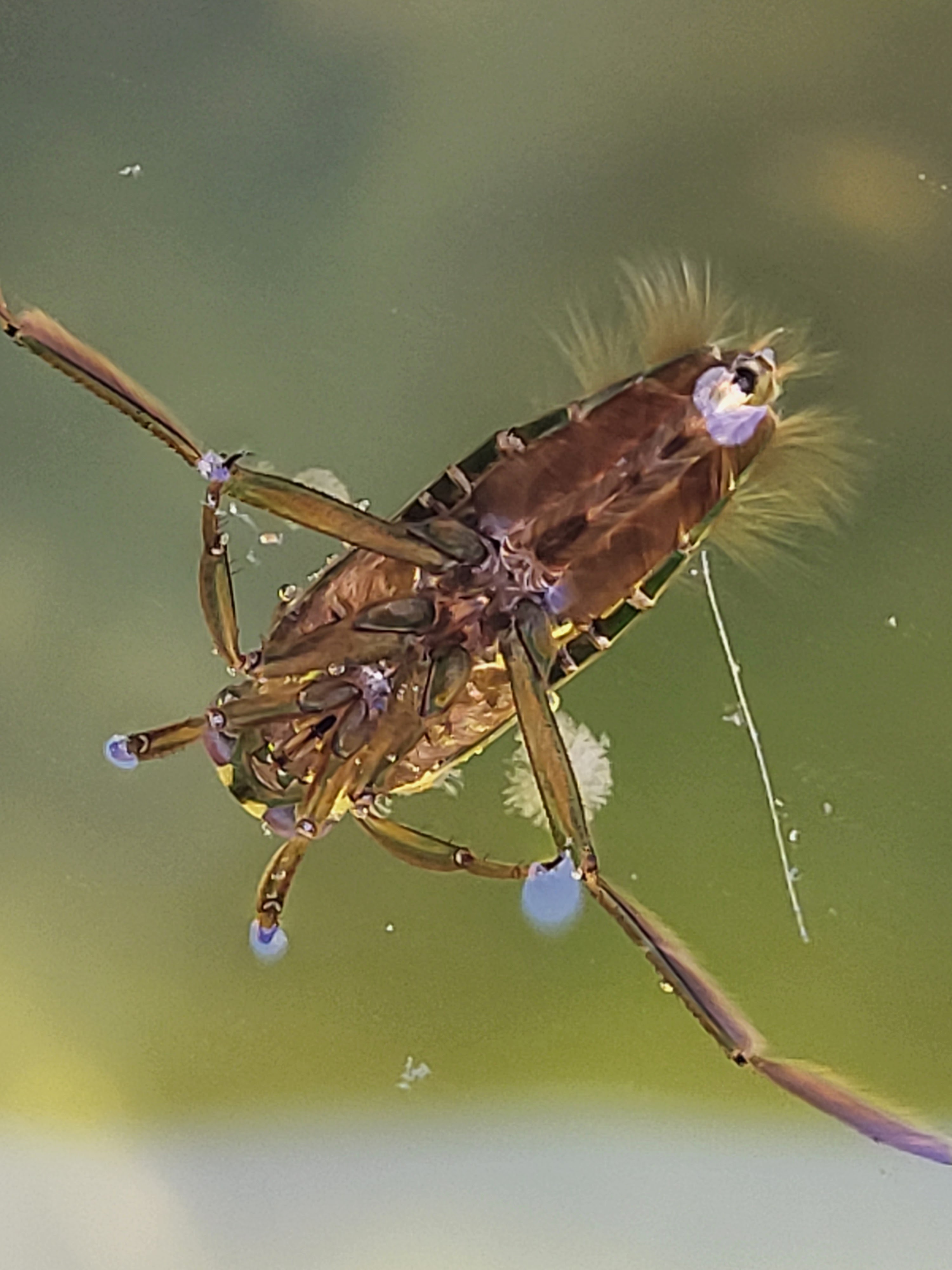
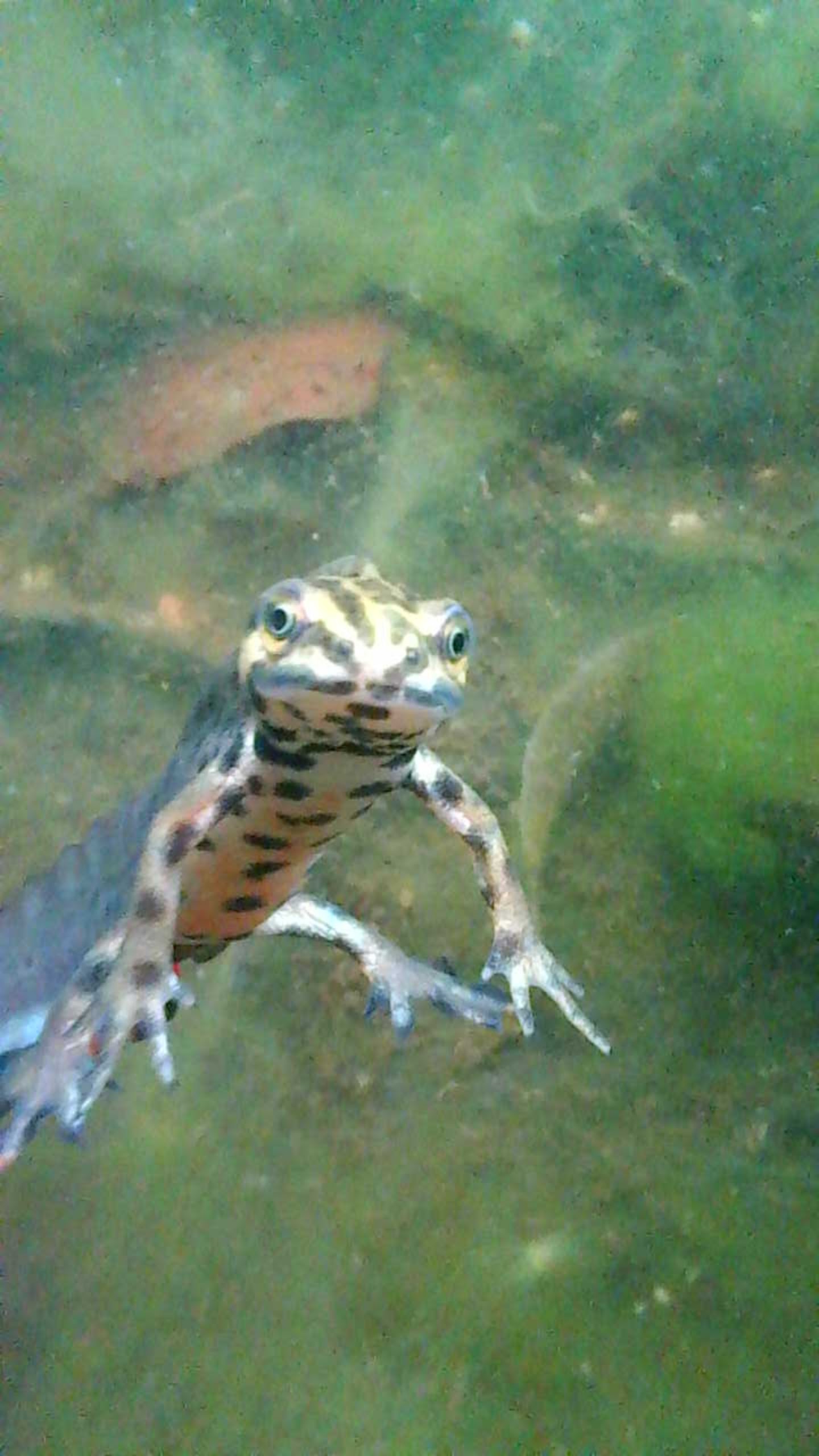
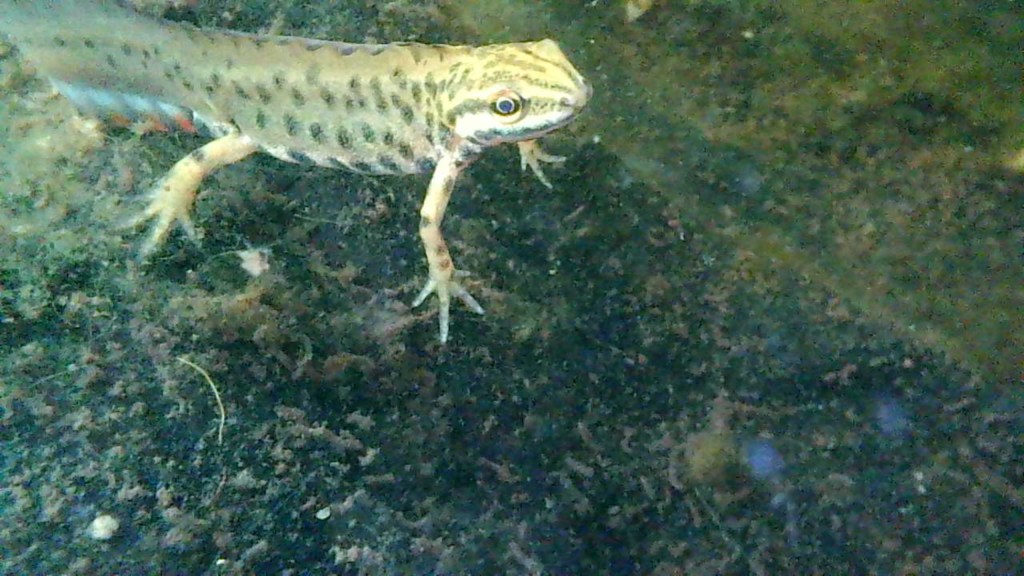
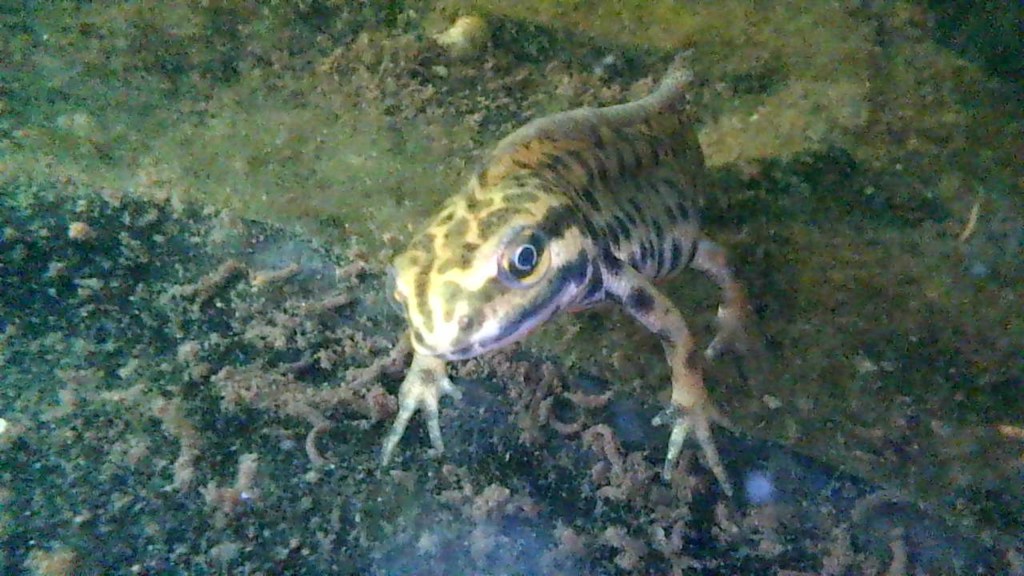
As there was a lot of underwater activity, I decided to use my endoscope today, to see if I could get a look at the newt underbelly. They look so different underneath, although you do get a hint of it in the neon-coloured blue and red flashes at the end of the tail. Newts remain fairly dull brown colours on their backs, for camouflage, while their underside is bright red or orange. This acts as an ‘I’m poisonous’ deterrent for predators but also as an ‘I’m here’ signal during the mating season.
Wednesday 8th April
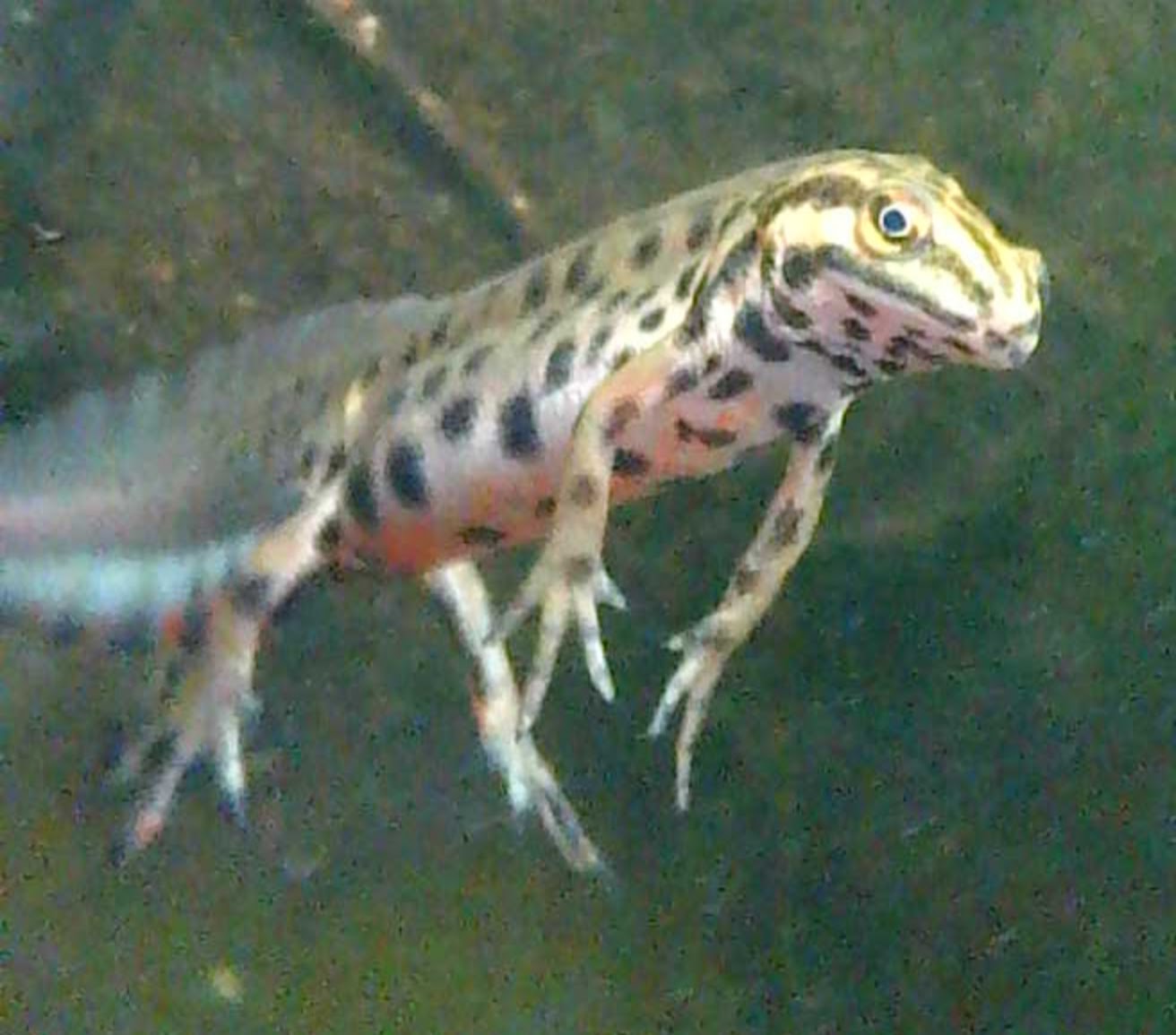
On Wednesday it was the hottest day of the year so far, reaching 23 degrees in the Midlands. There were a few frogs about, basking in Lily Pond with heads just above the water surface.
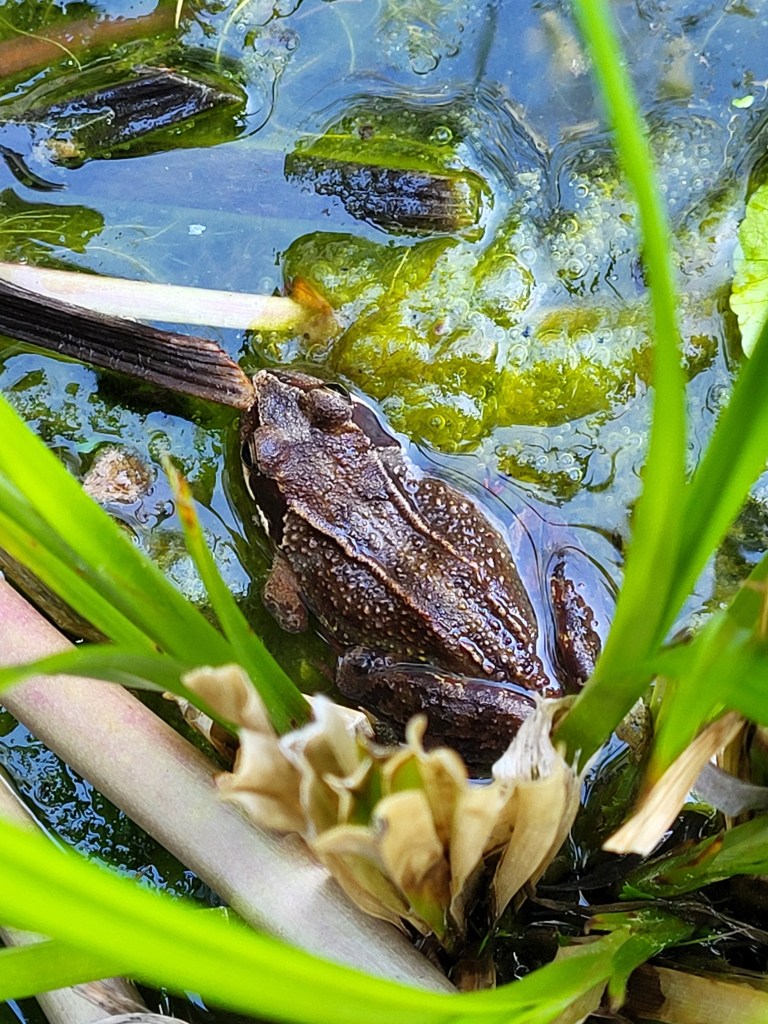
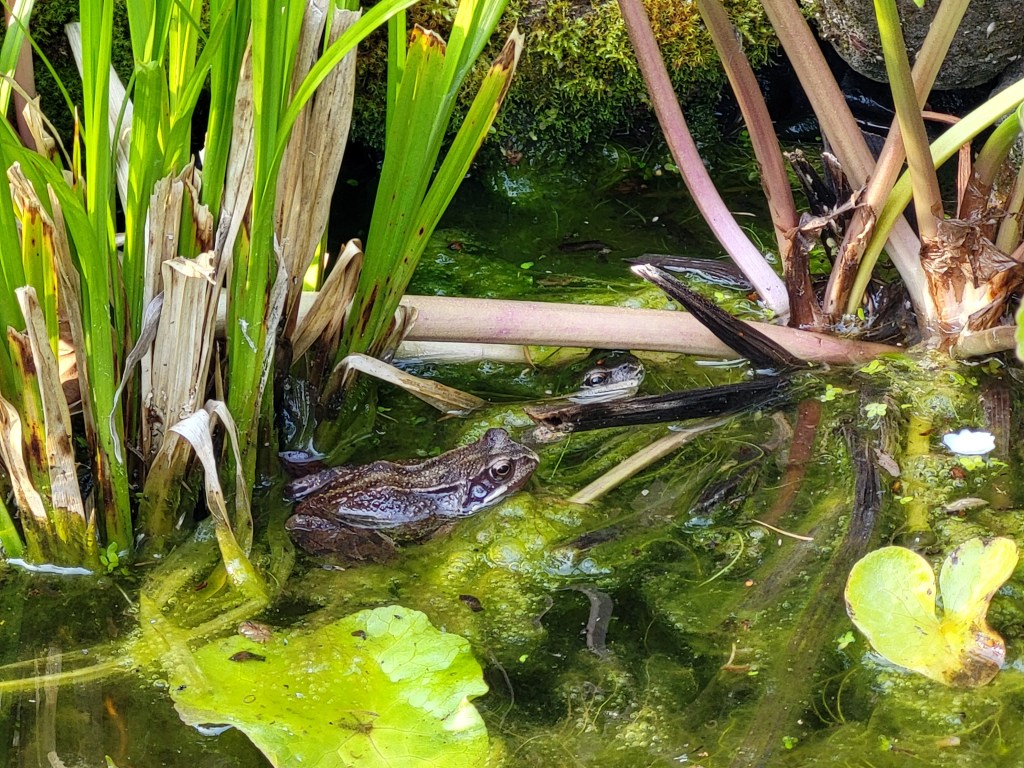
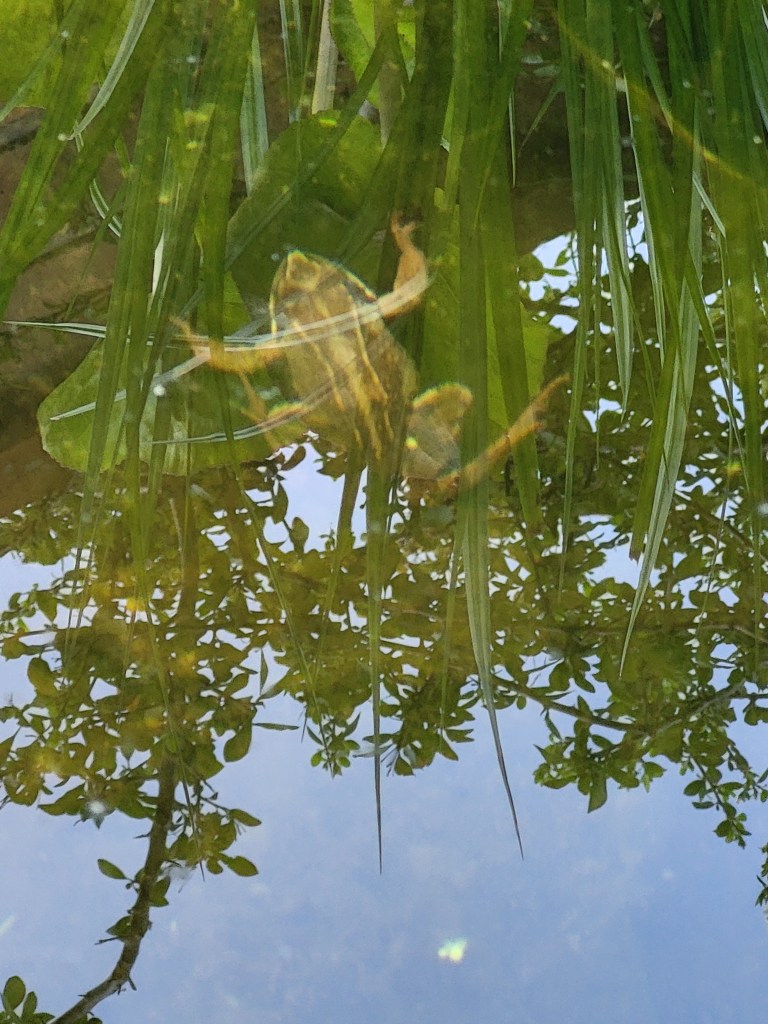
And the newts were busy underneath them, caught by endoscope…
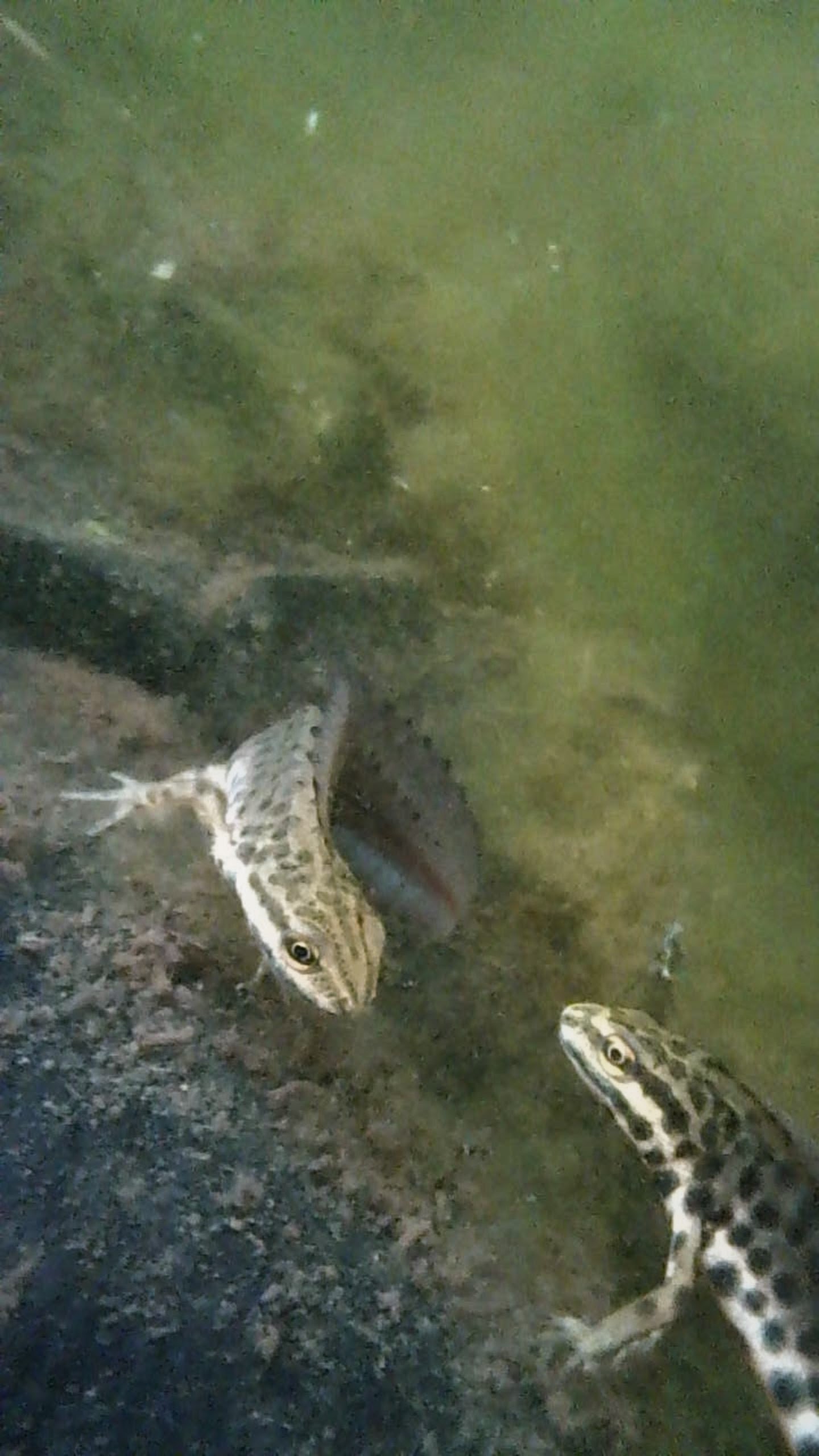
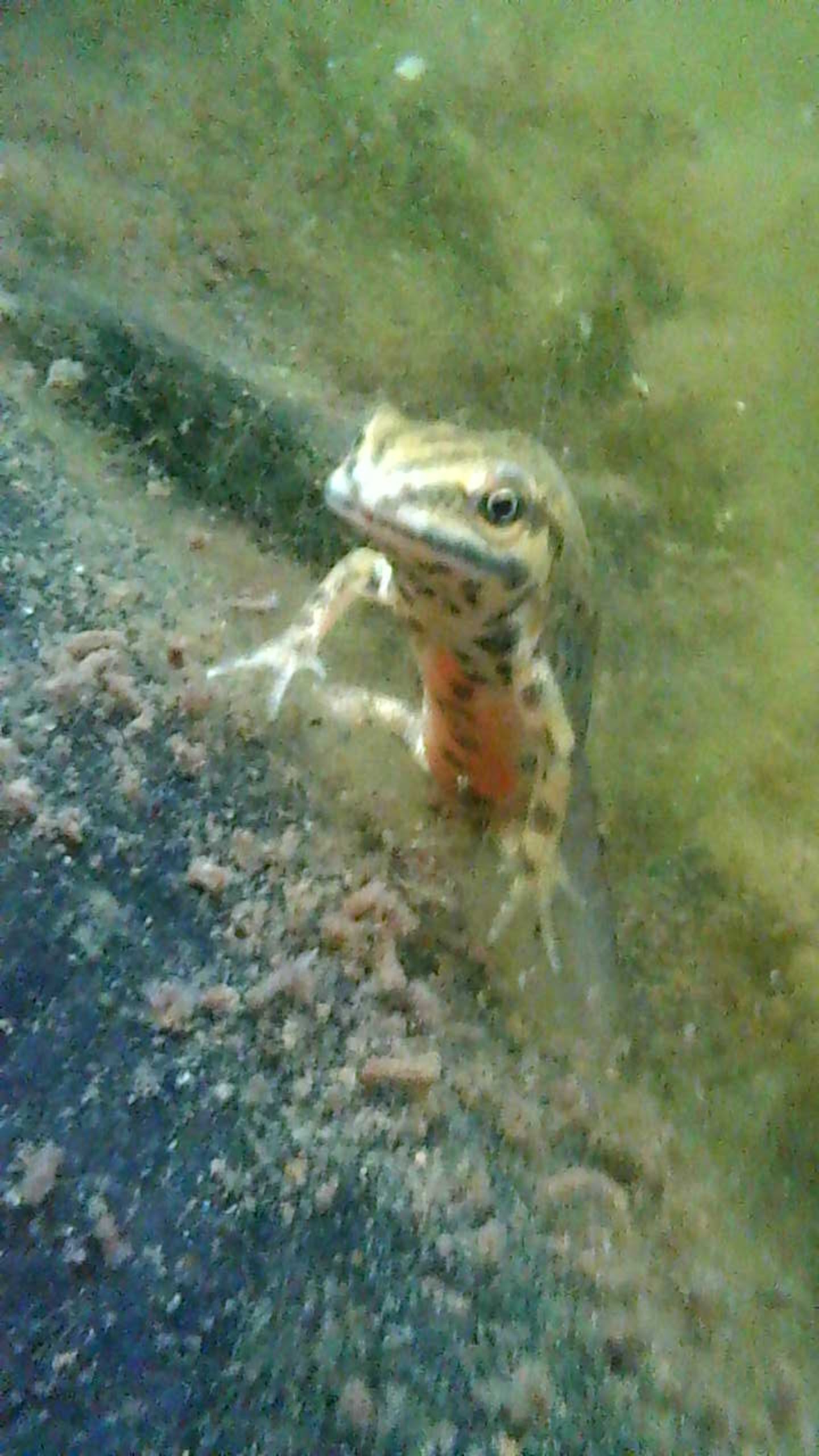
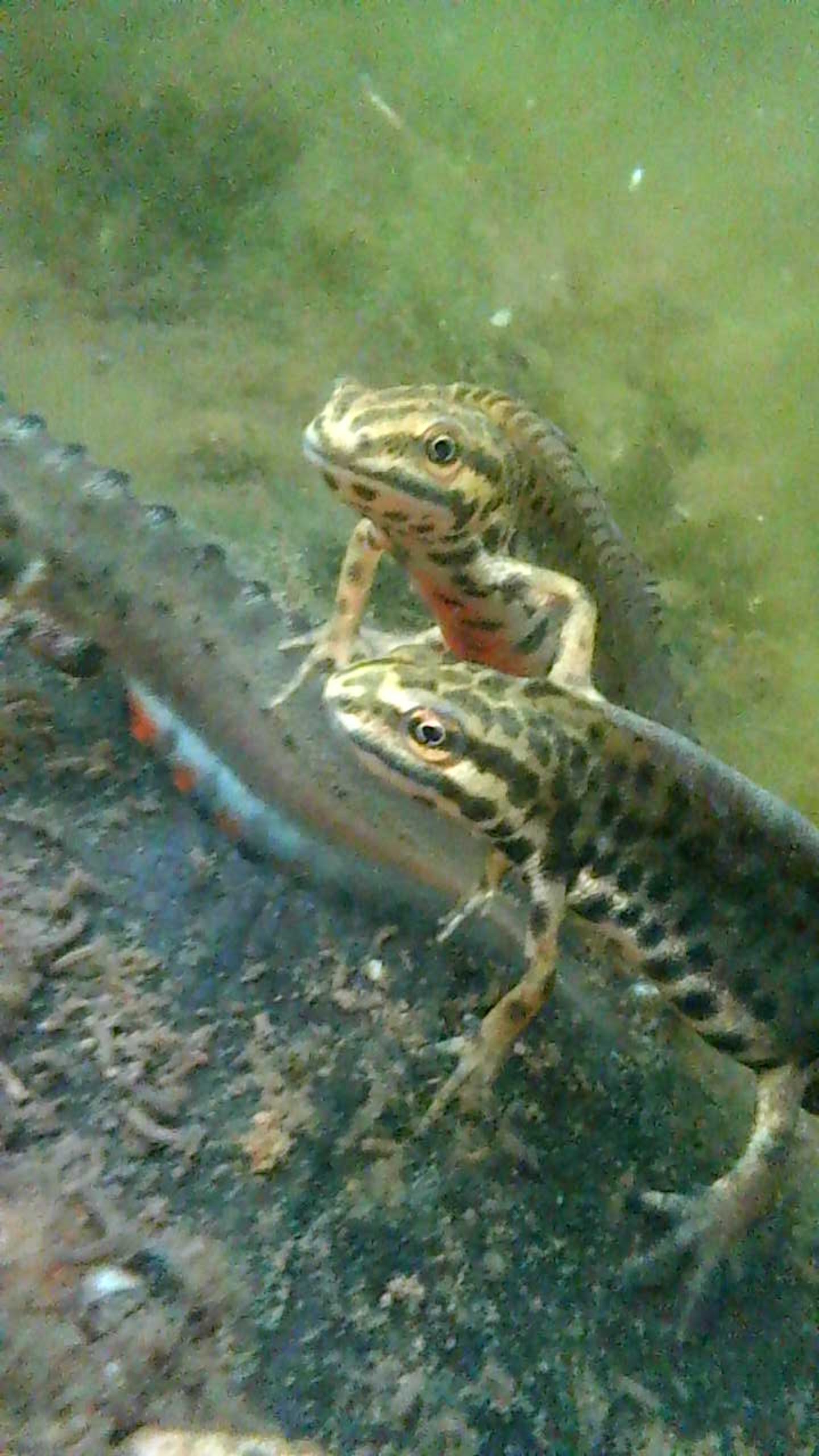
…and by smartphone, showing courting behaviour, including the tail flick.
You will also notice two moments where the newts come to the surface to gulp air. They do breathe using lungs when out of the water, but newts are aquatic and can stay underwater for hours, absorbing oxygen through the skin. They can stay underwater for extended periods during winter hibernation. You will also see a female newt using her back legs to wrap her eggs into submerged leaves. And you will also notice the birdsong, an ever present backdrop to my pond videos.

 FROG BLOG